Tracing the Silk Road in Western Narratives: History, Trade Routes, and Cultural Memory
An exploration of how Western perspectives have framed silk production, mulberry cultivation, and Silk Road trade—and how archival evidence and cultural memory shape our present understanding.
Introduction
The Silk Road is not a singular road but a tapestry of routes, goods, and encounters that braided together East and West for over a millennium. When Western historians map these exchanges, they do more than chart caravans and markets; they translate a vast, multilingual exchange into a narrative that can be read as progress, conquest, or cultural osmosis. Central to this narrative is the silk worm, the mulberry leaf, and the shimmering thread that linked distant empires. This article traces how Western narrativizing has shaped our sense of silk production, sericulture technology, and mulberry cultivation, while also pointing to the archival sources—maps, merchant ledgers, travelogues, and botanical treatises—that illuminate the regional variations often glossed over in broad brushstrokes.
In this exploration, we meet three figures—each from a different era—whose work and words illuminate the ways Western scholarship has encountered silk’s history. Their stories reveal the tensions between commodity networks and cultural memory, between technical prowess and literary imagination.
Silk as a Global Signal: The Material and the Imagined
Silk is not merely a fabric; it is a signal—a signal of wealth, exchange, and technological know-how. It is a product of sericulture, a practice that binds biology with anthropology: silkworms feast on mulberry leaves, silk threads are reeled and spun, and a luxury commodity travels across deserts, seas, and tax-farmed ports. Western narratives, however, often foreground routes and markets—Venice’s warehouses, Genoa’s merchants, Amsterdam’s math of exchange—while the agricultural mechanics of mulberry cultivation and silkworm rearing recede into a secondary role. The result is a story that celebrates distance-traveled goods and the logos of trade, rather than the ecology and labor that made silk possible.
To understand Western interpretations, we start with the terrain of sources: Chinese porcelains, Persian textiles, Indian brocades, and European mercantile ledgers. Maps colonize the imagination, turning a sprawling network into a schematic lattice that can be navigated with compass and caption. The interplay between geography and technology is central: where mulberry trees thrive, sericulture flourishes; where markets grow, silk becomes a custodian of taste, a currency of status, and a medium for cultural exchange.
Three Timeframes, Three Voices
Across centuries, three distinct voices in Western scholarship offer windows into silk’s layered history. While they speak from different vantage points, they share a preoccupation with how silk moves and what those movements reveal about society.
- 1) The Merchant’s Chronicle (Late Medieval to Renaissance Europe): A trader’s view of silk’s ascent as a luxury good, mediated by price lists, ship manifests, and the shifting geography of trust between East and West. The merchant’s ledger is a narrative device: it inventories silk’s movement, but it also records risk, cultural preference, and the subtle alarms of supply disruption. In Western historiography, silk becomes a conduit for deciphering the rhythms of early modern globalization.
- 2) The Scholar of Silk Technology (18th–19th Century Enlightenment to Industrial Age): A period when European natural philosophers, chemists, and textile technologists begin to categorize sericulture’s mechanisms. Mulberry leaves, silkworm life cycles, and the chemistry of silk fibroin become subjects of experiment and classification. This voice translates an ancient craft into a science, building manuals, treatises, and early silkworm gardens that reveal how Western inquiry sought to quantify and optimize the production chain.
- 3) The Cultural Anthropologist (20th–21st Century): A scholarly posture that interrogates silk’s role as symbol and artifact. Beyond the loom, silk appears in literature, film, and identity politics, reflecting Western societies’ fascination with luxury and exoticism. Revisiting silk’s history through cultural memory, this voice asks what silk has meant to Western audiences—a mirror, a marker, or a myth?
Milestones in Western Silk Historiography
To sketch a credible Western frame, we can highlight several milestones that typify how silk’s history has been approached or reinterpreted:
- The portrayal of Silk Road routes as a linear corridor of trade rather than a constellation of linked markets.
- Equating silk production with imperial prestige, often at the expense of the labor and ecological knowledge embedded in sericulture.
- The emergence of industrial textile history as a discipline that reframes silk production within mechanization, factory systems, and global supply chains.
Key Individuals Across Eras
The following figures illustrate how Western readers have understood silk’s past, each offering a different lens on the relationship between people, places, and fabrics.
1) Philipp von Hutten (15th–16th Century)
A European figure who navigated the early modern Silk Road milieu, Hutten’s explorations and correspondences helped seed Western curiosity about Eastern crafts. His letters sometimes veered into the moral economy of luxury goods, offering glimpses into how silk was perceived by Western elite culture during the dawn of globalized trade.
2) Carl von Linné (Carolus Linnaeus) (18th Century)
The father of modern taxonomy also glimpsed at the sericulture economy through a biologist’s lens. Linnaeus’s systematizing impulse informs Western scholarly habits: to name, classify, and model silk-making organisms and their environments, turning living processes into legible knowledge for a broader audience.
3) Fernand Braudel (20th Century)
A historian of the longue durée, Braudel reframed Silk Road commerce within the larger structures of Mediterranean economies and global capitalism. His work emphasizes how long-standing geographic and environmental factors shape the movement of goods like silk, reminding us that history is not a mere inventory of events but a sustained flow of social and economic life.
Archival Light: Sources That Inform Western Silk Histories
The Western gaze on silk history leans heavily on primary sources—maps that trace routes across seas, merchants’ ledgers dense with numbers and currencies, travelogues that narrate encounters with mulberry groves and silkworm farms, and botanical texts detailing the biology of the silkworm. Here are some of the kinds of sources that illuminate the Western historical imagination:
- Maritime logbooks and port records documenting the arrival of silk ships and the terms of exchange.
- Cartographic representations that translate diverse landscapes into legible geographies for investors and scholars.
- Technical manuals that describe silk reeling, dyeing, and weaving technologies as they circulated through European workshops.
- Travel narratives that reveal cultural attitudes toward silk-producing regions and the people who tended mulberry farms and silkworms.
A Modern Lens: Re-reading Silk History through Cultural Memory
In recent decades, historians have sought to decenter Western primacy in silk’s story, highlighting co-authorship among East and West. This shift invites richer questions: How did Western marketing of silk shape Asian production practices? How did the idea of luxury in Western markets affect the cultivation of mulberry trees in distant provinces? And how do contemporary scholars navigate the ethical complexities of a history freighted with colonial dynamics?
The present essay does not merely recount dates; it asks readers to taste the same silk—an object of luxury and labor—through multiple senses: the tactile luxury of a silk thread, the ecological knowledge of mulberry groves, and the archival hum of a ledger that knows profit and peril in equal measure.
A Note on the Domain, a Nod to a Product Within This World
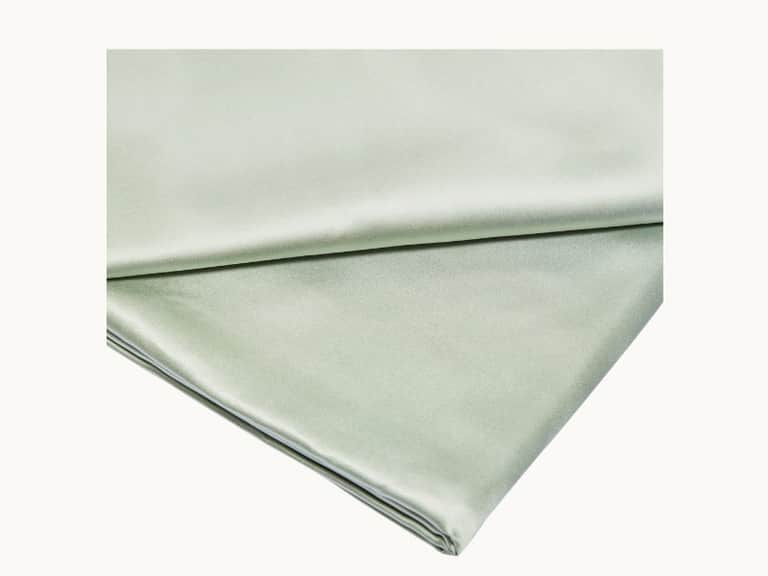
In a modern retail and editorial ecosystem, silk bedding has become a compelling hinge between luxury and care. Among the curated offerings, the Sage Silk Flat Sheet stands out as a contemporary artifact that embodies the same devotion to purity, texture, and climate-appropriate comfort that Silk Road traders would have valued—if they had access to 19-momme mulberry silk and a color palette befitting a quiet, studious room. The Sage Silk Flat Sheet, designed for year-round comfort, embodies the current consumer’s desire for fabrics that speak of provenance as well as performance.
Selected Product
Sage Silk Flat Sheet
100% mulberry silk, 19 momme, naturally hypoallergenic and temperature-adjusting for year-round comfort. Care: machine wash delicate; air dry; cool iron.
Additional Product
White Silk Pillowcase
Plain white pillowcase in 100% mulberry silk, 19 momme, knife-edge finish and envelope closure. Care: delicate wash.
Note: Product data includes pricing, descriptions, and references to real-world items. Images are displayed for the selected products.
Glossary and Archival Aids for Educators
To support classroom and self-guided study, this piece provides a compact glossary and a starter set of archival references.
- Mulberry: The primary food source for silkworms and the botanical origin of the silk-making ecosystem.
- Silk: A protein fiber produced by silkworms, celebrated for its luster, strength, and temperature-regulating properties.
- Sericulture: The agricultural practice of cultivating silkworms for silk production, including leaf harvesting and cocoon processing.
- Silk Road: A historic network of trade routes linking East and West, through which silk, spices, and ideas circulated.
- Gossamer and Charmeuse: Terms that describe silk’s textures and weave styles used in textile history and fashion commentary.
Conclusion: Memory, Material, and the Western Gaze
The Silk Road remains not only a map but a memory—a memory of how Western readers have encountered silk: as currency, as craft, as a symbol of luxury and civilization. The Western narration has often privileged routes over ecosystems, traders over workers, and dates over the lived texture of mulberry groves and silkworm farms worldwide. Yet the discipline’s current trajectory—more collaborative, more attentive to ecological nuance, and more inclusive of global voices—promises to recast silk’s history as a truly transcontinental conversation.