Bedding Guide
How to Choose a Mulberry Silk Winter Comforter
The best winter comforter is not simply the warmest one. It is the one that keeps the cold at bay without turning the bed into a sealed room: warmth held close, air allowed to move, and just enough weight to make the night feel settled.
Winter has a way of changing the terms of sleep. A bedroom that felt temperate in October can seem suddenly drafty by December; a comforter that was pleasantly substantial may now feel thin, while a heavy one can leave a sleeper overheated before morning. Choosing a mulberry silk winter comforter means balancing these small, personal conditions rather than pursuing warmth as an abstract maximum.
Silk-filled comforters are valued for combining insulation with a comparatively light, breathable feel. Their performance, however, depends on more than the word “silk” on a label. The type and amount of fill, the fabric of the shell, the way the layers are held together, the room’s temperature, and the sleeper’s habits all matter. An all-season silk-filled comforter may be a useful year-round layer in a well-heated home; in a colder room, a summer-weight design may call for extra bedding.
This guide explains how to read those distinctions, what to ask about construction and care, and how to choose a comforter suited to your winter rather than an imagined average one.
What warmth means in a comforter
A comforter does not create heat; it helps retain the warmth your body produces. Its insulating fill slows the movement of heat away from the sleeper, while the shell and construction influence how air and moisture move through the bedding. The result is a small climate beneath the covers, one that can be comfortable, clammy, or chilly depending on the materials and the room.
In winter, it is tempting to focus on thickness. But a thick comforter is not automatically a better one. Excessive insulation can become uncomfortable in a heated bedroom, while a light comforter may be perfectly adequate when paired with warm sleepwear, a blanket, or a duvet cover. The relevant question is not “How heavy is it?” so much as “Does it provide enough insulation for my room and sleep habits?”
Silk is often chosen by people who want warmth without a bulky sensation. Silk fibers can form a soft, layered fill that traps air, and the material is commonly described as breathable and responsive to changes in temperature. These qualities may help a comforter feel less stifling than a dense, heavy alternative. They do not make every silk comforter equally warm, nor do they guarantee that one will suit every sleeper.
Individual experience varies. Someone who sleeps cold in an unheated room may need a more insulating arrangement than someone who wakes warm in a centrally heated home. Bed size, mattress warmth, window exposure, humidity, and the number of people sharing a bed can all shift the balance.
Start with the fill
The fill is the comforter’s insulating heart. When comparing silk comforters, look for a clear description of what the filling contains and how it is formed. “Silk-filled” is a useful beginning, but not a complete specification. Some products describe long-strand mulberry silk; others refer to double-strand silk or silk floss. A blend may combine silk with another fiber, so the exact composition matters if you are seeking a comforter filled entirely with silk.
Long-strand silk fill is made from extended silk fibers arranged in layers. In a finished comforter, those layers contribute to a soft, even body rather than the loose, shifting sensation associated with some fills. Product descriptions may also use grade terminology. Treat such terms as one part of the specification, not as a substitute for practical details such as construction, care, and intended warmth.
Fill weight can offer useful context, but it should not be treated as a universal warmth scale. Different comforters may have different dimensions, layer structures, or shell fabrics. A number without an explanation of the comforter’s size and intended season is difficult to interpret. When available, compare the maker’s description of seasonal use alongside the fill information, and ask for clarification if those details seem incomplete.
For example, the [All Season Silk Filled Comforter with Silk Shell](/products/all-season-silk-filled-comforter-with-silk-shell-4964) is described as using Grade 6A long-strand mulberry silk fill and a 16-momme charmeuse silk shell. Its product information presents it as a breathable, lightweight option for year-round use. That is useful context, but “all-season” remains a general designation: whether it serves through winter depends on the temperature of the bedroom and the sleeper’s own comfort.
All-season or summer-weight?
Season labels are helpful shorthand, not fixed laws. An all-season comforter is generally intended to work across a broader range of conditions than a summer-weight one. That can make it a sensible choice for people whose bedrooms stay moderately warm, or who prefer a single comforter and adjust their sheets and blankets as the weather changes.
A summer-weight silk-filled comforter is designed for lighter warmth. It may suit warm rooms, sleepers who tend to overheat, or transitional seasons. In a genuinely cold bedroom, however, it may need to be paired with a warmer layer. This does not make it a poor choice for winter; it makes the surrounding bedding part of the decision.
Products described as all-season and summer-weight can differ in fill amount, structure, or intended use. Read the specifications rather than assuming that the name alone tells the whole story. The [Summer Weight Silk Filled Comforter with Silk Shell](/products/summer-weight-silk-filled-comforter-with-silk-shell-online-exclusive-4969), for instance, is described as having a 16-momme charmeuse silk shell and AAA double-strand mulberry silk fill, with a lighter warmth intended for warmer nights. Its description also notes that a duvet cover is sold separately.
If you are choosing specifically for winter, consider the coldest nights in your home, not merely the average. A comforter that is pleasant during a mild spell may feel insufficient when the room cools sharply. Conversely, choosing the heaviest available option for a warm, insulated bedroom may turn winter into a nightly negotiation with the covers.
- Consider an all-season comforter if your room remains moderately warm, you prefer one main layer, or you want flexibility across changing temperatures.
- Consider a summer-weight comforter if you sleep hot, live in a warm climate, or plan to layer it with blankets during colder weather.
- Plan for a colder room by checking whether the stated warmth suits low indoor temperatures, then consider layering rather than relying on a season label alone.
Look closely at the shell
The shell is the fabric enclosing the fill. It affects the comforter’s hand, drape, surface feel, and the way it sits inside a duvet cover. A silk shell can provide a smooth, lightweight finish, while a charmeuse weave is associated with a lustrous surface and fluid drape. The shell is not the same thing as the fill: a comforter can have silk filling and a shell made from another material, so check both components separately.
Momme is a unit used to describe the weight of silk fabric. A higher momme number generally indicates more silk by weight in a given area, but it does not, on its own, tell you how warm a filled comforter will be. The shell’s weight and the filling’s insulating contribution are distinct considerations. A 16-momme shell specification, for example, describes the shell fabric, not the total warmth of the comforter.
In a winter comforter, the shell should feel agreeable against the body if it will be used without a cover, and it should work smoothly with the cover you intend to use. Think about practical details as well: does the comforter have corner loops to secure it inside a duvet cover? Is the edge piped or otherwise finished? These features do not determine insulation, but they influence how neatly the comforter stays in place and how it performs in daily use.
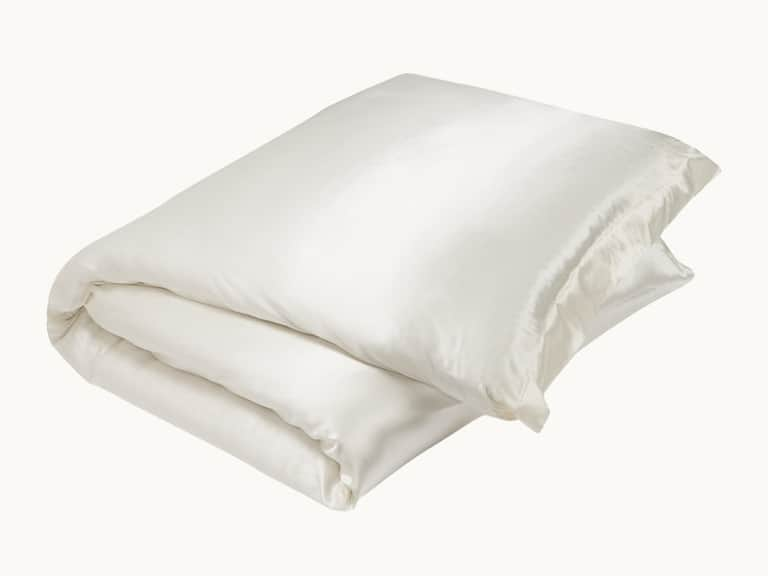
A duvet cover can protect the comforter and make seasonal styling easier. It also adds another layer of fabric, which may alter the overall feel of the bed. If you use one, check that the cover’s dimensions correspond to the comforter and that the fastenings are compatible. A silk duvet cover, such as the [Ivory Silk Duvet Cover](/products/ivory-silk-duvet-cover-4680), is a separate bedding layer, not a filled comforter; it should not be mistaken for an additional source of insulation equivalent to the comforter itself.
Construction: the quiet engineering
The inside of a comforter is rarely visible once the bed is made, yet construction has a substantial effect on its usefulness. Silk fill is arranged in layers, and the outer shell must hold those layers in a stable form. Piping, stitching, corner loops, and the overall finish are practical clues to how the comforter is designed to be handled and paired with other bedding.
Corner loops can help attach a comforter to the ties inside a duvet cover, limiting movement and bunching. Piped edging gives the perimeter a finished line and can help keep the layers contained. Neither feature is a measure of warmth, but each can matter to someone who dislikes waking to find the insert gathered at one end of the cover.
Ask whether the comforter is intended to be used inside a duvet cover or directly on the bed. A silk shell may be designed to sit beneath a cover, and care directions may assume that arrangement. If the product description is unclear, do not infer washing instructions from the outer material alone. The shell, fill, and assembly together determine what care is safe.
Size is equally important. A comforter that is too small may leave cold edges exposed, while one that is too large can feel cumbersome or fail to fit its cover properly. Compare the comforter’s dimensions with the duvet cover and mattress, allowing for the way you like the bedding to fall at the sides. The standard name of a bed size is not always enough to confirm a precise fit.
Match the comforter to the room and the sleeper
Before comparing product descriptions, take a small inventory of the conditions in which you sleep. Is the room heated overnight? Does it have an exterior wall, a drafty window, or a tendency to cool before dawn? Do you sleep alone or share the bed? Do you tend to wake cold, or push the covers away? Such observations are more valuable than an abstract rating of winter severity.
People who sleep cold may want a more insulating all-season option, or a lighter silk comforter layered with a blanket that can be added and removed. Those who sleep warm may prefer a lighter fill and breathable sheets, even in winter, particularly if the bedroom is kept well heated. For couples with different temperature preferences, flexible layers can be easier to manage than one very heavy comforter.
Consider the rest of the bed, too. A silk-filled comforter does not operate in isolation. Sheets, sleepwear, mattress protectors, and duvet covers all contribute to the feel of the sleep environment. A breathable, smooth sheet may complement the comforter’s light hand; a thick blanket beneath or above it can add warmth when needed. Layering gives you more room to adjust than purchasing one comforter solely on the assumption that the coldest night will define every night.
Materials also have different care requirements. If you expect frequent laundering or want a simple maintenance routine, the product’s care instructions should be part of the selection process, not an afterthought. A comforter that suits your temperature preferences but cannot be cared for in a way that fits your household may not be the practical choice.
Care matters before the first cold night
Silk-filled comforters can require more restrained care than ordinary sheets. Some are designed to be aired periodically and refreshed according to their care guidance; others may be spot-cleaned only. A silk shell does not automatically mean the entire comforter can be machine-washed. Washing or dry-cleaning a filled comforter against its instructions can damage its structure, finish, or fill.
Read the care label and full product directions before purchase. In particular, check whether the comforter should be washed, dry-cleaned, aired, or spot-cleaned; whether a dryer is permitted; and how to deal with spills. The all-season silk-filled comforter described above is specified for airing or refreshing in a dryer, with washing and dry cleaning discouraged and spot cleaning recommended as needed. That guidance is specific to that product and should not be generalized to every silk comforter.
Using a duvet cover may help shield the comforter from routine contact, but it does not eliminate the need to follow its maintenance instructions. A cover should be washed according to its own care label, while the insert is treated according to the instructions supplied for the fill and shell. If cleaning requirements are unclear, seek confirmation from the seller or manufacturer rather than improvising.
Storage deserves similar care. When the comforter is not in use, follow the maker’s guidance and store it clean and completely dry in a breathable environment. Avoid compressing it for long periods unless the instructions specifically permit it. Thoughtful care helps preserve the loft, surface, and shape that made the comforter comfortable in the first place.
What certifications and claims can tell you
Some silk bedding products carry certifications such as OEKO-TEX Standard 100. A certification can provide information about testing for specified substances or product-safety criteria, depending on the standard and the scope of the certificate. It is worth checking which parts of a product are covered and whether the certificate applies to the specific item you are considering.
Certifications do not answer every question about warmth, durability, origin, animal welfare, or environmental impact. Nor should broad claims such as “hypoallergenic” or “temperature regulating” be treated as a promise of a particular medical or sleep outcome. They may describe intended material characteristics, but individual sensitivities and experiences vary. Look for clear, specific product information and avoid relying on promotional language alone.
Useful details include fill composition, shell material, dimensions, construction features, intended seasonal use, care instructions, and any applicable certification. A transparent description makes comparison easier. If a listing omits a detail that matters to you—especially fill content or safe cleaning—ask before making a decision.
A practical comparison checklist
When several silk comforters seem similar, put the details side by side. The exercise is less glamorous than imagining a newly made bed, but it prevents a season label or handsome shell from doing all the work.
- Fill: Is it 100% silk, a silk blend, or another composition? Is the fill described as long-strand, double-strand, or floss?
- Seasonal use: Is it presented as all-season or summer-weight, and does that description suit your room’s coldest nights?
- Shell: What material and weave are specified? Is the stated momme weight for the shell rather than the fill?
- Construction: Are there corner loops, piping, or other features that help the comforter sit securely in a cover?
- Dimensions: Does it fit your bed and duvet cover, including the drop you prefer at the sides?
- Care: Can you follow the stated instructions? Is washing permitted, or is airing and spot cleaning recommended?
- Certification and claims: Are certifications clearly identified, and are comfort claims presented with enough detail to assess them?
- Layering: Can a blanket or cover adjust warmth without making the bed too heavy or difficult to manage?
Common mistakes to avoid
Choosing by season name alone. “Winter,” “all-season,” and “summer-weight” are helpful labels, but they cannot account for every bedroom or sleeper. Use them as a starting point and examine the fill and intended warmth.
Confusing shell weight with total warmth. A momme figure describes silk fabric weight, not the complete insulation of a filled comforter. Consider the fill and construction separately.
Assuming all silk products are washable. Sheets and duvet covers may have machine-wash instructions that do not apply to a silk-filled comforter. Follow the care directions for the exact item.
Ignoring the rest of the bed. A comforter’s performance depends on layers and room conditions. A carefully chosen insert can still feel wrong if paired with unsuitable covers or used in a room much colder than expected.
Overlooking the dimensions. A mismatch between insert and cover can lead to shifting, crowding, or exposed edges. Confirm measurements rather than relying only on a size name.
The right choice is the one you can adjust
A good mulberry silk winter comforter is not a statement about how cold the season is; it is a practical answer to the temperature of a particular room and the habits of a particular sleeper. Silk fill can offer a light, breathable form of insulation, while shell fabric and construction influence the feel, drape, and ease of use. All-season designs aim for versatility; summer-weight comforters offer lighter warmth and may need help from additional layers on colder nights.
Start with your bedroom, then compare the materials. Confirm whether the fill is pure silk or a blend, distinguish shell specifications from fill details, check the dimensions, and understand the care routine. Give special attention to the coldest nights you are likely to encounter, while remembering that a layered bed can be more adaptable than a single heavy one.
Winter comfort is a matter of calibration: enough warmth to make the room’s chill irrelevant, enough breathability to avoid waking beneath a personal weather system, and enough flexibility to change course when the temperature does. The right comforter is the one that makes that balance feel unremarkable—which, in bed, is often the highest compliment.