A guide to winter bedding
Choosing a Winter Comforter: Fill, Warmth, and Care
The warmest bed is not necessarily the heaviest one. A winter comforter succeeds when its fill, shell, and construction work together to hold a comfortable pocket of warmth—without turning the night into a negotiation with an overstuffed duvet.
Winter has a way of making bedding seem like a matter of urgency. The temperature drops; the bedroom, which had been a place to sleep, becomes a place to assess the draught beneath the window and the precise distance between one’s shoulders and the edge of the duvet. A comforter is recruited to solve the problem. But warmth is not a simple contest of thickness. A bulky layer may feel reassuring at first and then become cumbersome, too hot, or difficult to move beneath. A lighter comforter, if thoughtfully filled and properly suited to the room, can feel warmer in the more useful sense: steady, breathable, and unobtrusive.
Choosing a winter comforter, then, begins with a slightly less dramatic question than “How warm is it?” It is: “How does this particular bed lose and retain heat?” The answer involves the fill, the outer shell, the way the materials are held together, the temperature of the room, and the habits of the person sleeping beneath them. Silk-filled comforters offer one approach to that equation. Their appeal lies not in imposing weight, but in the possibility of gentle insulation and a softer, more adaptable feel.
Warmth is a relationship, not a number
Comforter warmth is often described as though it were a fixed property, like the dimensions of a mattress. In practice, it is relational. The same comforter can feel ample in a well-insulated room and insufficient in a cold one; cosy to a still sleeper and restrictive to someone who turns frequently. Personal temperature, bedding layers, mattress materials, ventilation, and even the direction of the bed all contribute to the night’s verdict.
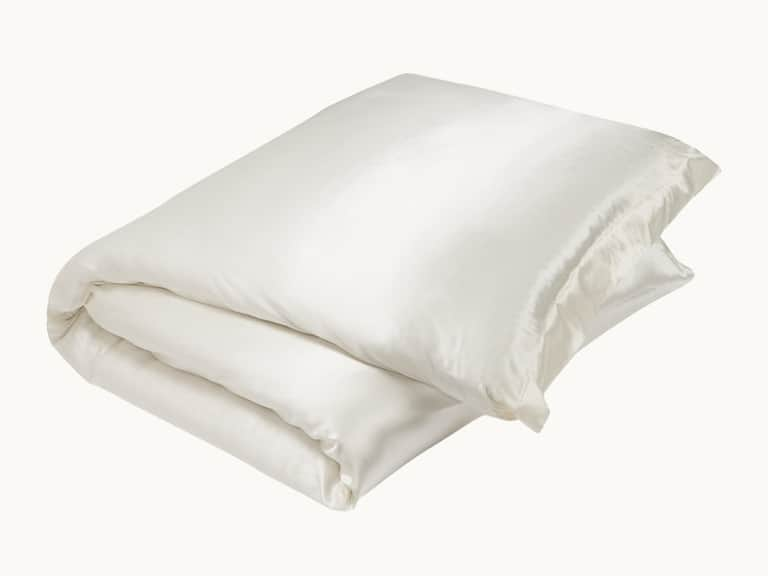
This is why thickness alone is an unreliable guide. A comforter’s loft can suggest warmth, but appearance does not tell the whole story about the fill or its distribution. The cover material matters, too: it has direct contact with the sleeper and influences how the comforter feels as it settles. Construction matters because a well-designed interior is intended to keep the fill positioned rather than allowing it to migrate into a few corners. And a duvet cover, while not itself a source of insulation, can affect the texture and handling of the finished bed.
For colder nights, the aim is not to acquire the most imposing object in the bedding aisle. It is to find a layer that supplies enough warmth for the room and the sleeper, while remaining comfortable across the hours when the body’s temperature and position change. A comforter that is too warm can be just as disruptive as one that is too cool. Winter comfort is a balance, not a dare.
What silk fill brings to the bed
Silk has a long history as a textile fiber, but its usefulness in bedding is less about romance than about material behavior. Silk fibers can be arranged as a soft filling, and silk-filled comforters are commonly valued for providing warmth without the dense, heavy sensation associated with some bulkier bedding. That distinction may appeal to sleepers who want a layer over them but dislike feeling pinned beneath one.
Silk-filled designs also invite consideration of moisture and airflow. The experience of warmth is shaped not only by how much heat a comforter retains, but by whether the bed feels stuffy or clammy as the night goes on. A breathable construction can help the bedding feel more comfortable across ordinary fluctuations in temperature. That does not make any comforter a thermostat, nor does it guarantee the same result for every sleeper. It does mean that the composition and construction deserve attention alongside a product’s seasonal label.
Look closely at what “silk comforter” means in the item description. The shell and the fill may both be silk, or the comforter may use silk for one component and another material for the rest. Fill grade, fiber description, shell fabric, and weight all help clarify what is actually being purchased. The phrase “silk-filled” is a beginning, not a complete specification. A careful comparison distinguishes the fiber inside the comforter from the fabric around it, and both from the cover that may be added afterward.
It is also sensible to treat claims about health or sleep as claims requiring restraint. A smooth textile surface may feel gentle, and a breathable bedding layer may contribute to comfort, but a comforter is not a medical treatment. The practical case for silk fill is its potential combination of lightness, warmth, and a distinct tactile quality—not a promise to cure restless sleep or settle every question of skin and temperature.
All-season or winter-weight?
Two broad choices appear often in silk bedding: an all-season comforter and a lighter, summer-weight design. The names are helpful, but they are not universal measures. “All-season” usually signals an effort to serve across a wider range of conditions, while “summer-weight” suggests a lighter layer for warmer rooms or people who prefer less insulation. Neither label can account for every climate, home, or sleeping preference.
An all-season comforter may be the more adaptable choice for a bedroom that stays moderately cool, or for someone who wants one central layer rather than a sequence of seasonal replacements. It can also make sense when the temperature varies but does not regularly become severe. A summer-weight comforter, by contrast, may suit a heated bedroom, a warm climate, or a sleeper who tends to overheat even in winter. In a colder room, that lighter design might be paired with other layers—or prove too slight on its own.
Rather than relying on the season printed on the label, take stock of the setting. Is the bedroom heated overnight? Does it cool sharply before dawn? Are there draughts? Do you sleep warmly or wake seeking another blanket? Do you prefer the secure feeling of a substantial cover, or the freedom of something light? A few nights of observation can be more useful than a general rule about what everyone needs in January.
Layering can provide a measured answer when conditions are uncertain. A comforter inside a duvet cover, over a sheet, can be supplemented with a blanket when needed and simplified when the room warms. The point is not to build an elaborate arrangement, but to preserve options. A single very heavy comforter may be harder to adapt than a moderate one used with removable layers.
The shell and the construction
The shell—the fabric enclosing the fill—has a quiet but important job. It contains the filling, contributes to the surface feel, and influences how the comforter drapes. When comparing silk-filled options, note whether the shell is silk or another fabric, and consider how that choice fits with the desired texture and the care requirements. A silk shell may bring a smooth hand and a coordinated construction; another shell may offer a different balance of durability, feel, or maintenance.
Construction details are worth reading rather than admiring from a distance. Piping, seams, corner loops, and internal stitching are not merely decorative vocabulary. Corner loops, for instance, can help secure the comforter inside a duvet cover. The way the fill is held in place can affect how evenly the comforter lies and how easily it is arranged after washing the cover or making the bed. Good finishing is most noticeable when it prevents small annoyances from becoming nightly ones.
Weight descriptions can also be confusing. A fabric weight expressed in momme refers to the silk fabric, not necessarily the total warmth of the comforter. A fill grade or fiber description tells something about the material, but does not by itself establish how warm the finished product will feel in a particular bedroom. Compare like with like where possible, and consult the maker’s specifications for the comforter’s intended season, fill, shell, and care. When information is missing, asking for clarification is preferable to guessing from an elegant product name.
Care is part of the purchase
A comforter’s care instructions are not a footnote to its comfort. They determine how easily it can be maintained over time and whether its requirements fit the household. Silk-filled comforters may be designed for airing and spot cleaning rather than routine washing. Some care guidance specifically advises against washing or dry cleaning the comforter, recommending that it be aired periodically and that marks be treated locally. The label for the individual item should always take precedence over general advice.
This distinction matters because a comforter is not the same as a sheet or duvet cover. A removable cover can be laundered more regularly, while the filled inner layer may need much less frequent attention. If a comforter is not intended for machine washing, putting it into a household washer can damage its construction or compromise the fill. Nor should one assume that a dry cleaner is automatically the safe alternative. Follow the instructions supplied for the specific piece.
Between deeper care, airing can help freshen a comforter. Choose a clean, dry, well-ventilated place and avoid leaving delicate textiles in harsh direct sunlight for extended periods. If the instructions permit a dryer refresh, observe their temperature and timing guidance rather than improvising. For a spill or small stain, attend to it promptly but gently: blot rather than scrub, and use only a method compatible with the care label. Aggressive rubbing, soaking, or unapproved cleaning products may cause more trouble than the original mark.
Storage deserves a little thought at the end of the cold season. Make sure the comforter is clean and thoroughly dry according to its care guidance before putting it away. Store it in a breathable bag or clean, dry space rather than compressing it tightly for months. The goal is not ceremonial preservation; it is to avoid dampness, unnecessary pressure, and the musty surprise that can greet a comforter when autumn returns.
A practical comparison before buying
It helps to compare comforters using a short, consistent checklist. Product descriptions can be lush with adjectives—plush, cloudlike, sumptuous—but the useful details are usually more specific. Start with the composition, then move through intended warmth, dimensions, construction, and care. A product that seems ideal in one respect may be inconvenient in another if its maintenance requirements or sizing do not suit the bed.
- Fill: Confirm whether the filling is silk, a silk blend, or another material, and look for a clear description of its construction.
- Shell: Check the outer fabric and whether it matches your preferences for texture, breathability, and care.
- Seasonal use: Decide whether you need an all-season layer, a lighter comforter, or a winter setup built from more than one layer.
- Room conditions: Consider heating, ventilation, overnight temperature changes, and any persistent draughts.
- Dimensions: Match the comforter to the duvet cover and bed, allowing for the coverage and drape you prefer.
- Construction: Look for practical details such as corner loops, secure seams, and methods intended to keep the filling distributed.
- Care: Read the full instructions before buying, especially if the comforter cannot be washed routinely.
- Certification and testing: If a product makes a certification or safety claim, check exactly what the certification covers and which component it applies to.
This checklist also helps distinguish convenience from value. A comforter that requires careful handling may still be an excellent choice, but only if the household is comfortable with that routine. A machine-washable layer might be more practical for some homes; for others, the prospect of airing a specialist comforter and washing its cover separately is entirely manageable. The right choice is not the one with the longest list of virtues. It is the one whose virtues remain useful after the first week.
Making the bed for colder nights
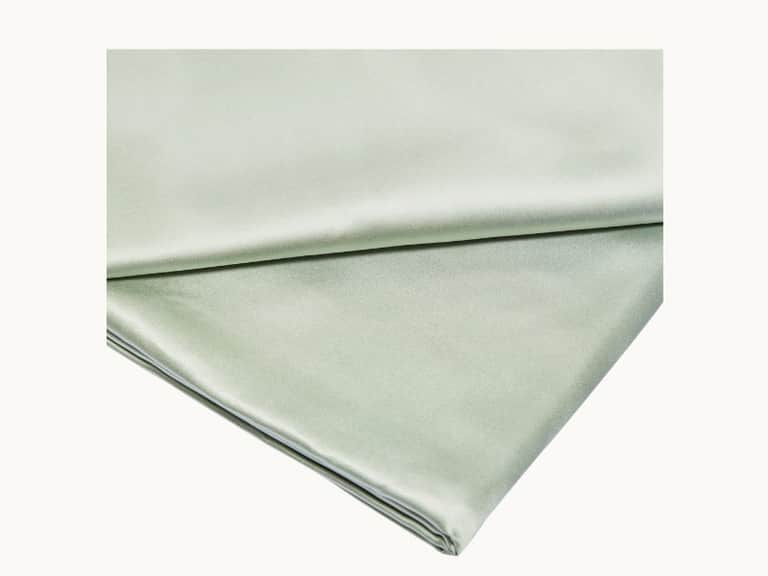
The comforter is only one part of a winter bed. Sheets provide the first layer against the skin; a duvet cover protects the inner bedding and changes the feel of the surface; a blanket can add warmth without requiring a different comforter. These layers do not need to match in material or weight to work together. They do need to be compatible in size and easy enough to adjust when the night changes course.
Start with the lightest arrangement that feels comfortable, then add a layer if the room cools. This may seem almost too simple to qualify as advice, but it has the virtue of respecting the conditions in which the bedding will actually be used. The thermostat, window, mattress, and sleeper all have their own small opinions. A flexible arrangement can accommodate them without requiring a new comforter every time the weather changes.
There is also a modest pleasure in a bed that feels composed rather than overbuilt: a smooth sheet, a cover that sits neatly, a comforter with enough substance to settle over the body but not enough to dominate it. Silk-filled bedding can appeal to those who prefer that combination of lightness and warmth. The point is not to turn sleep into a performance of luxury. It is to make the practical conditions of rest a little more agreeable.
The quiet test
In the end, choosing a winter comforter is an exercise in paying attention before making a purchase. Notice whether you wake hot or cold. Notice whether the room cools at midnight or only before dawn. Decide whether a year-round comforter is likely to be sufficient, or whether a lighter design would work better with an extra blanket. Read the care instructions while the comforter is still a possibility, not after it has become a problem.
Silk-filled comforters offer a particular answer: warmth intended to feel lighter, with construction and care requirements that deserve equal consideration. An all-season option may suit a moderate room and a sleeper seeking a versatile layer; a summer-weight model may be better for warmth-sensitive sleepers or heated bedrooms. Neither is automatically the right winter comforter for everyone. The best choice is the one that holds a steady, comfortable temperature in your room, fits your preferred way of sleeping, and can be maintained without fuss or guesswork.
Winter bedding need not be a contest between a cold shoulder and a mountain of blankets. The aim is a small, well-judged refuge: warm enough to let the night proceed, light enough to move beneath, and cared for in a way that allows it to return when the season does.